Operational Assessment Domains
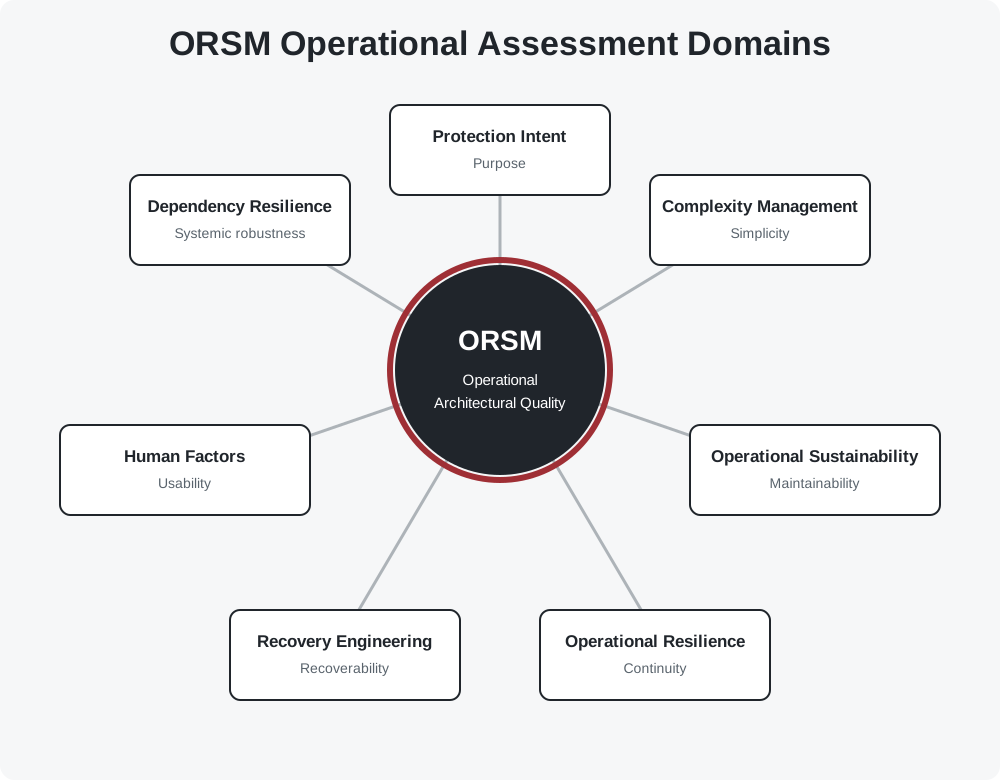
Security architecture cannot be evaluated through a single measure. ORSM evaluates architecture across seven Operational Assessment Domains, each examining a distinct characteristic of architectural quality.
Domain 1 --- Protection Intent
Characteristic: Purpose
Verifies that every security capability exists for a clearly defined and continuing business purpose, traceable to a protected asset, credible threat and measurable objective.
Domain 2 --- Complexity Management
Characteristic: Simplicity
Determines whether architectural complexity is understood, measured, governed and actively managed as a finite organisational resource.
Domain 3 --- Operational Sustainability
Characteristic: Maintainability
Evaluates whether the organisation possesses sufficient operational capacity --- including skills, workload and technical debt --- to sustain the architecture over its lifecycle.
Domain 4 --- Operational Resilience
Characteristic: Continuity
Determines whether critical business services remain operational when security capabilities fail or become unavailable.
Domain 5 --- Recovery Engineering
Characteristic: Recoverability
Evaluates the organisation's ability to restore security capability rapidly, repeatably and predictably following disruption.
Domain 6 --- Human Factors
Characteristic: Usability
Evaluates whether security controls align with realistic operational behaviour, considering friction, exception rates and bypass behaviour.
Domain 7 --- Dependency Resilience
Characteristic: Systemic Robustness
Determines whether dependency concentration on shared platforms or vendors introduces unacceptable operational or security risk.
No single domain should be considered in isolation. Durable protection depends on the architecture performing adequately across the model as a whole.